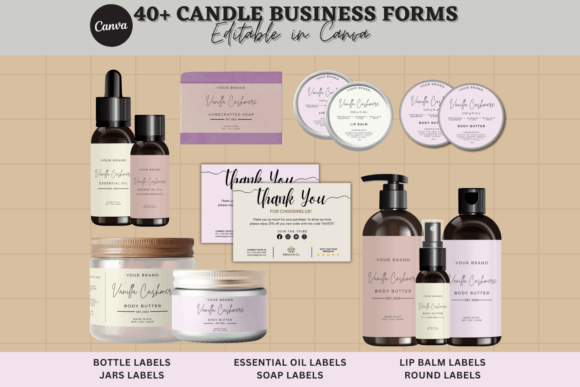
Elevate Your Packaging: A Deep Dive into the Cosmetic Product Label Template Canva
There is a specific moment in the lifecycle of a product where design meets commerce, and nowhere is this intersection more critical than in the beauty and skincare industry. When a customer walks down an aisle or scrolls through an online store, they are making subconscious decisions about quality, trust, and value within milliseconds. This is the domain of packaging design, and having the right tools is not just a convenience—it is a business necessity. Enter the Cosmetic Product Label Template Canva, a design asset that has become a quiet revolution for small business owners and creative professionals alike. It bridges the gap between professional graphic design and accessible, DIY branding.
At its core, this template is more than just a pre-made layout; it is a strategic framework designed to impress. The visual personality of the template exudes a sleek, modern sophistication that feels at home on a high-end vanity or a boutique shelf. It avoids the clutter that plagues many amateur designs, relying instead on clean lines and balanced composition. This modern typography approach ensures that the product itself remains the hero. Whether you are dealing with serif fonts that communicate tradition and reliability or sans serif fonts that scream modern minimalism, the template structure adapts to support the typeface choices, creating a visual hierarchy that guides the consumer’s eye naturally from the logo to the key ingredients.
The Anatomy of a Versatile Design Asset
One of the most practical aspects of this specific resource is its integration with Canva. For many entrepreneurs, Adobe Illustrator is a steep learning curve. Canva democratizes the design process, and this template leverages that accessibility. However, do not mistake accessibility for a lack of professionalism. The Cosmetic Product Label Template Canva is crafted for maximum impact, offering a seamless user experience that allows for deep customization without the risk of "breaking" the design.
When you open the file, you are greeted with a premium font aesthetic that is fully editable. This is crucial for brand identity. You are not locked into a generic font; you can change the text color, size, and font style to match your specific branding guidelines. If your brand voice is whimsical, you might swap the header for a script font or a handwritten font. If your brand is clinical and scientific, you might tighten the letter-spacing on a clean sans-serif. The template provides the scaffolding, but you provide the soul.
Furthermore, the versatility of the sizing is a massive advantage for packaging design. The beauty industry is not one-size-fits-all. You might be packaging a thick body butter in a jar, a lightweight serum in a dropper bottle, or a toner in a Boston round bottle. The included sizes—ranging from 4.5 x 3.5 inches for a standard cosmo bottle to larger dimensions for 8oz containers—ensure that you do not have to guess at print dimensions. This attention to detail prevents costly printing errors and ensures your label fits perfectly, regardless of the vessel.
Strategic Applications: Beyond the Bottle
While the name suggests a singular purpose, the utility of this design extends far beyond simple logo design or bottle labeling. Think of this template as a creative font and layout playground that can influence your entire visual ecosystem. The principles used in these labels—visual hierarchy, whitespace management, and typographic contrast—are the same principles used in editorial design and web design.
For instance, the layout elements can be stripped down and repurposed for social media graphics. If you are launching a new serum, the label design establishes the look, but you need that look to translate to Instagram Stories or Pinterest pins. By using the same font pairing found on your physical label for your digital marketing, you create a cohesive brand identity that builds consumer trust. Consistency is key in marketing; when a customer sees your ad online and then holds the product in their hand, the visual language should be identical.
Consider the "back of the bottle" experience as well. Often, entrepreneurs focus so heavily on the front label that the ingredients list becomes an afterthought. This template allows you to treat the secondary information with respect. By utilizing different weights of the same typeface family, you can create a clear distinction between marketing copy and regulatory information. This improves readability and ensures compliance while maintaining the sophisticated aesthetic of your brand.
Mastering Typography and Hierarchy
A great label is essentially a lesson in visual hierarchy. The Cosmetic Product Label Template Canva is built to handle this, but as the designer, you need to understand how to execute it. The hierarchy usually flows from the Brand Name (Hero) to the Product Name (Sub-hero), down to the Description and Ingredients (Body).
When customizing, pay close attention to the relationship between your header fonts and your body text. If you choose a bold, decorative display font for the product name, ensure the body text is a highly legible, neutral sans-serif. This contrast creates rhythm. Avoid using a script font for small text; while it looks beautiful large, scripts often become illegible when scaled down, which hurts the user experience.
The template allows you to experiment with this balance easily. You can test how different weights affect the "color" of the text block. A heavier font weight creates a darker block of text, which can ground the design, while lighter weights create an airy, luxurious feel. This is where you apply your knowledge of modern typography to ensure the label is not just pretty, but functional.
Practical Workflow: From Screen to Shelf
For the entrepreneur or designer utilizing this tool, the workflow is streamlined but requires attention to detail. Since the template is optimized for Canva Free accounts, it removes the barrier of expensive software subscriptions. However, the move from digital screen to physical print requires specific technical considerations.
First, regarding commercial licensing: always verify the terms of the fonts used within the template. Canva’s license generally covers commercial use for items created on their platform, but if you swap in a third-party premium font, you must ensure you have the rights to use it on physical products for resale. This is a non-negotiable step in professional branding.
Second, evaluate the design assets included. The template offers different bottle sizes, but you must measure your actual physical packaging. A 4oz cosmo bottle from one supplier might have slightly different curvature than another, affecting how the label adheres. Print a test sheet on plain paper first. Cut it out and wrap it around your bottle. Does the text wrap awkwardly around the side? Is the barcode scannable? This tactile testing phase is what separates amateur packaging from professional products.
Finally, consider the finish of your label. The design on the screen looks one way, but matte paper, glossy paper, or transparent vinyl will react differently with the colors and fonts you choose. A high-contrast sans serif font might look sharp on glossy stock but may lose definition on a textured, recycled paper stock. Adjust your design accordingly.
The Psychological Impact of Packaging
Never underestimate the psychological weight of your packaging. In the crowded cosmetic market, your label is your silent salesperson. It communicates the quality of the ingredients inside before the customer ever opens the cap. By using a structured, aesthetically pleasing template, you are signaling competence and care.
A disjointed, poorly aligned label suggests a lack of attention to detail, which consumers often extrapolate to the product formulation itself. Conversely, a label that utilizes professional typography, balanced spacing, and high-quality graphics suggests that the brand cares about the entire user experience. This is the essence of brand perception.
The Cosmetic Product Label Template Canva is not just a shortcut; it is a strategic tool. It allows you to leverage professional design principles without needing a decade of experience. It empowers you to create a visual identity that stands shoulder-to-shoulder with established brands on the shelf. Whether you are a hobbyist making soaps at home or a marketer launching a new line for a boutique, this resource provides the foundation for a brand that looks as good as it performs.